Just You and the Water: A Real Talk Guide to Paddling Solo
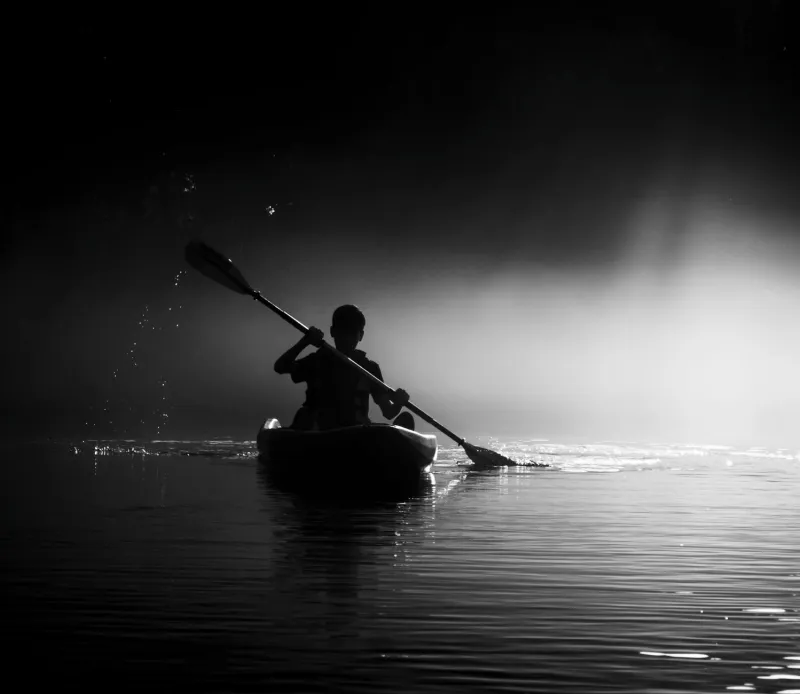
The first time Dana Kowalski paddled alone, she sat in her kayak at the put-in for about ten minutes before moving. Not because she was scared, exactly. More because she'd never realized how loud silence could be when there was no one else around to fill it.
"I kept waiting for someone to say 'okay, let's go,'" she laughs. "And then I realized I was the someone."
Dana has been paddling solo on the lakes and slow rivers of northern Minnesota for six years now. What started as a logistical solution — her usual paddling partner moved away and she didn't want to stop going out — turned into something she describes as the most clarifying habit of her adult life.
She's not alone in this, which is maybe the ironic part. Solo paddling is growing, quietly and steadily, among paddlers who've discovered that going it alone isn't the same thing as being reckless. It's a different kind of experience — more demanding in some ways, more rewarding in others, and increasingly well-supported by safety technology and planning resources that make it genuinely accessible.
But let's be honest about what it actually takes.
The Fear Factor Is Real — And That's Okay
Anyone who tells you solo paddling doesn't come with a dose of anxiety at the start is either very experienced or not being straight with you. The fear is part of the point. When you're alone on the water, you're the only person responsible for the decisions being made. That weight is real, and sitting with it is part of what makes solo paddling transformative.
The key is distinguishing between fear that's telling you something useful — conditions are beyond your skill level, you're underprepared, the weather is turning — and fear that's just the unfamiliar feeling of being self-reliant.
"The first few solo trips, I second-guessed everything," says James Abubakar, a whitewater kayaker from western North Carolina who now leads solo skill-building workshops. "Every decision felt huge because there was no one to bounce it off. But that's actually the point. You get really good at trusting your own read on a situation."
Building that trust takes time and intentional progression. You don't start solo paddling on Class III whitewater or open coastal water. You start somewhere familiar, in conditions well within your ability, and let your confidence grow from there.
Pre-Trip Planning: The Non-Negotiables
Solo paddling doesn't mean winging it. In fact, the planning phase becomes more important when you're on your own, because there's no built-in backup if something goes sideways.
Here's what experienced solo paddlers consistently point to as essential:
Tell someone where you're going. This sounds obvious, but a surprising number of solo paddlers skip it. Before you put in, someone on dry land should know your planned route, your expected return time, and what to do if they don't hear from you by a specific hour. A detailed float plan shared with a trusted person is your first and most important safety layer.
Know your self-rescue. In a group, a capsized paddler has help. Alone, you are your own rescue. Wet exits, re-entries, and paddle float rescues should be practiced until they're automatic, not theoretical. Take a skills course if you haven't. This isn't optional.
Carry a way to call for help. A fully charged phone in a waterproof case is a minimum. A personal locator beacon (PLB) or satellite communicator like a Garmin inReach is a serious upgrade, especially for remote or backcountry water. The goal is that if something goes wrong, you can reach help even if you're miles from cell service.
Check the conditions, then check again. Weather on the water can shift faster than forecasts predict. Build in a margin — if conditions are at the edge of comfortable, that's a day to stay home or choose a more sheltered route. The water will be there next weekend.
The Mental Game Nobody Talks About
Solo paddling is, in a real way, a mental sport. Without conversation to pass the time, your brain does interesting things. Some paddlers find this uncomfortable at first — the internal noise gets louder before it gets quieter. Others take to it immediately.
Dana describes the first hour of a solo paddle as a kind of mental decluttering. "All the stuff that was spinning in my head when I launched — work, to-do lists, whatever — it kind of settles. By the time I've been on the water for an hour, I'm just there. I'm not anywhere else."
This is the psychological reward that solo paddlers talk about most, and it's one that's genuinely hard to access in a group setting. Group paddles are social, energetic, fun — but they don't offer the same quality of interior quiet. Solo paddling creates a container for a kind of presence that's increasingly rare in everyday life.
For paddlers dealing with anxiety or burnout, this isn't just a nice side effect. It's often the whole reason they keep going back.
Building Confidence Without Taking Dumb Risks
The path to becoming a capable solo paddler is pretty straightforward, even if it requires some patience.
Start on water you already know well. A familiar lake or a gentle river section you've paddled with others is a good first solo destination. Knowing the water removes one variable while you get comfortable with the others.
Progress gradually. Each solo trip should push your comfort zone slightly — a longer distance, a new stretch of water, slightly more challenging conditions — but the keyword is slightly. Incremental exposure builds real confidence. Big jumps build close calls.
Connect with the solo paddling community. Despite the solitary nature of the activity, there's a surprisingly active network of solo paddlers online and in local clubs who share routes, safety tips, and honest accounts of what works and what doesn't. You can go alone without going without support.
Why It's Worth It
Ask experienced solo paddlers why they do it, and you'll get variations on the same answer: because it changes how you relate to yourself.
There's something about being accountable only to the water — no pace to match, no consensus to reach, no one to defer to — that reveals things about your decision-making, your resilience, and your capacity for stillness that you might not find any other way.
The current doesn't negotiate. It just moves. And when it's just you out there, you learn to move with it on your own terms.
That's not reckless. That's the whole adventure.