The Other Half of the Paddle: How Smart Recovery Keeps You on the Water Longer

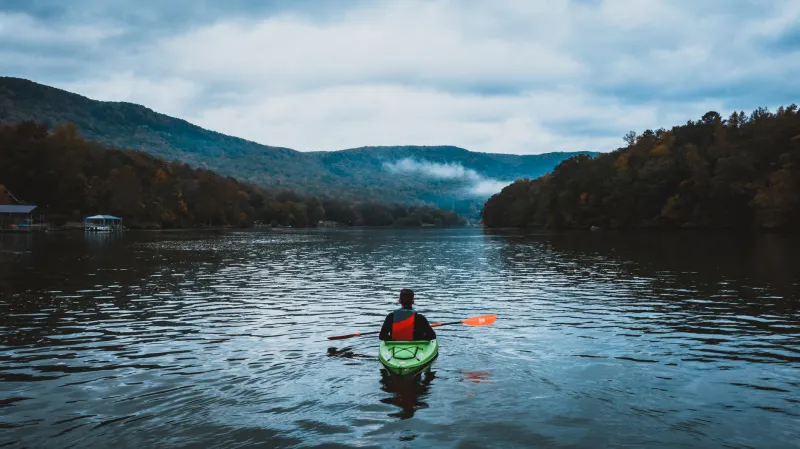
Photo by Photo by Marcin Simonides on Unsplash on Unsplash
You logged the miles. You hit the rapids. You made it back to the takeout with that specific kind of satisfied exhaustion that only comes from a full day on the water. And then — if you're like most paddlers — you threw your gear in the car, grabbed a gas station sandwich, and called it done.
Here's the thing: everything that happens after you step off the water is either helping you come back stronger or quietly stacking up debt your body will eventually collect on.
Recovery isn't a passive process. It's the other half of the paddle.
Why Paddlers Are Especially Vulnerable
Paddling is a deceivingly asymmetrical, repetitive-motion sport. Unlike running, where the movement pattern at least alternates between sides, paddling demands that you repeat the same rotational motion — sometimes thousands of times in a single outing — while your core, shoulders, and wrists absorb load in ways most people's bodies weren't built to handle indefinitely.
"The shoulder complex in paddlers is under constant stress in ways that casual athletes don't appreciate," says Dr. Ryan Calloway, a sports physiotherapist based in Asheville, North Carolina, who works extensively with whitewater and sea kayaking athletes. "The rotator cuff, the bicep tendons, the AC joint — we see chronic issues in all of them. And almost universally, the underlying cause is inadequate recovery between sessions, not the paddling itself."
That distinction matters. Paddling isn't inherently destructive. Paddling without recovery is.
The Myth of Pushing Through
Outdoor culture has a complicated relationship with pain. There's a certain badge-of-honor mentality around soreness and grinding through fatigue — the idea that if you're not suffering a little, you're not working hard enough.
In paddling communities, this shows up as people dismissing shoulder tightness as "just part of it" or treating rest days like weakness.
"That mindset is one of the most consistent things I see leading to serious injury," says Dr. Calloway. "Acute soreness after exertion is normal. Pain that persists, sharpens, or changes your movement patterns is your body telling you something is wrong. The paddlers who end up in my office with full rotator cuff tears almost always describe ignoring warning signs for months."
The science backs this up. Delayed onset muscle soreness (DOMS) — that familiar ache 24 to 48 hours after hard effort — is a normal inflammatory response to muscle fiber breakdown. It resolves. But repetitive strain injuries, tendinopathies, and nerve impingements don't follow that same arc. They compound.
Knowing the difference isn't about being soft. It's about being smart.
What Actually Happens in Your Body After a Long Paddle
When you finish a significant paddling session, your muscles are depleted of glycogen, mildly damaged at the fiber level, and flooded with metabolic byproducts. Your nervous system is fatigued. Your connective tissue — tendons, ligaments — has been under load and needs time to remodel.
The recovery window matters here. Research on endurance athletes consistently shows that the 30 to 60 minutes immediately following exercise is when your body is most primed to absorb nutrients and begin the repair process. Skipping this window doesn't mean the repair doesn't happen — it means it happens more slowly and less completely.
For paddlers specifically, the priority nutrients are:
- Protein: 20–40 grams to support muscle repair. A simple option: Greek yogurt, a protein shake, or chocolate milk (genuinely one of the most well-researched post-exercise recovery drinks).
- Carbohydrates: To replenish glycogen stores. Don't skip these in the name of eating "clean" after a workout.
- Electrolytes: You lose sodium, potassium, and magnesium through sweat, especially on warm-weather paddles. Water alone doesn't replace them.
A Practical Post-Paddle Routine You'll Actually Do
The best recovery routine is the one you'll stick with. Here's a realistic framework that doesn't require a foam rolling certification or an hour of free time.
Right after you get off the water (10–15 minutes):
- Eat or drink something with protein and carbs within 30 minutes if possible
- Do a slow, gentle shoulder mobility circuit: arm circles, cross-body shoulder stretches, doorframe chest openers
- Hydrate — more than you think you need
That evening:
- Spend 10 minutes with a foam roller on your thoracic spine (upper back). Paddling rounds the back forward; rolling it open counteracts that compression.
- Stretch your hip flexors. You've been seated for hours, and tight hip flexors affect your paddle posture more than most people realize.
- If your forearms are tight or your wrists feel stiff, a few minutes of wrist flexor and extensor stretches goes a long way toward preventing tendinopathy down the line.
Sleep: This is not optional. Deep sleep is when the majority of tissue repair occurs. If you're consistently shortchanging your sleep after hard paddling days, you're undermining everything else.
The Mental Side Nobody Talks About
Physical recovery gets all the attention, but mental fatigue is real — and it's particularly pronounced after technically demanding paddling like whitewater or open-ocean navigation, where your brain has been processing constantly for hours.
Mental fatigue affects reaction time, decision-making, and risk assessment. Getting back on difficult water when you're mentally depleted is genuinely dangerous, not just uncomfortable.
Simple strategies that help: give yourself a genuine buffer day between high-intensity sessions, spend time in nature that doesn't require vigilance (a walk in the woods, a hammock), and don't immediately fill post-paddle time with screens and noise.
Building Recovery Into Your Paddle Calendar
Dr. Calloway's recommendation for recreational paddlers who go out multiple times a week: treat recovery like a scheduled session, not an afterthought.
"Write it into your plan. If you paddle hard on Saturday, Sunday is active recovery — a short, easy float, a yoga class, a swim. Not another hard day. Your body doesn't adapt during effort. It adapts during rest."
The paddlers who are still out there in their 50s and 60s, logging miles and staying injury-free, aren't the ones who grinded through every warning sign. They're the ones who figured out that rest is part of the training — not a break from it.
The water isn't going anywhere. Take care of the body that gets you there.