Go Big or Stay Home: How to Actually Make That Call
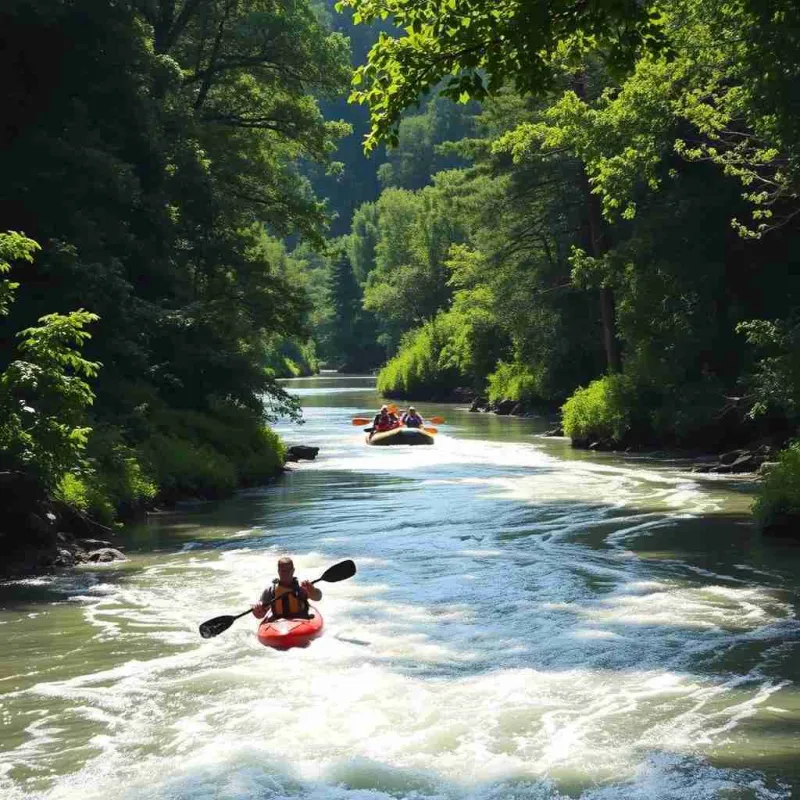
Photo: paddler deciding at river bank looking at rapids wilderness, via watersportsportal.com
Somewhere between your third season on the water and your first real taste of Class III, something shifts. You start scrolling trip reports at midnight. You bookmark rivers in states you've never visited. You catch yourself pricing flights to the Pacific Northwest over a Tuesday lunch break.
Welcome to the paddler's dilemma.
It's not a bad problem to have. That itch to chase bigger, wilder, more remote water is part of what keeps this sport alive. But there's a version of it that quietly burns people out—financially, physically, and psychologically—long before they ever hit their stride as paddlers. Learning to tell the difference between a trip worth chasing and one that's really just FOMO in a dry bag is a skill. And like most skills, it takes some honest self-assessment to develop.
The Hype Cycle Is Real, and It Will Play You
Social media has done something interesting to adventure travel. It's made the extraordinary feel ordinary—and made ordinary paddling feel like something to apologize for. When your feed is a highlight reel of kayakers threading granite slot canyons in Utah or SUP surfers riding coastal swells in Oregon, it's easy to look at your local flatwater reservoir and feel like you're missing out on your own life.
Here's the thing: most of those images represent the top one percent of one percent of any given paddler's actual time on the water. The other 99 percent is weekend sessions, shuttle logistics, gear repairs, and learning the same stretch of river over and over until it finally starts to make sense.
The psychological trigger isn't ambition—ambition is healthy. The trigger to watch for is avoidance. Are you chasing that epic trip because it genuinely aligns with where your skills are headed? Or are you chasing it because planning it feels better than admitting you've plateaued on the water you already have access to?
That's a harder question. But it's the right one.
Honest Skill Assessment Isn't Optional
Before you book anything, you need a realistic read on where you actually are as a paddler—not where you think you are, and definitely not where your most encouraging paddling buddy says you are.
Skill progression in paddling isn't linear. You can be genuinely confident in flatwater conditions and completely out of your depth the moment moving water enters the picture. You can handle moderate whitewater on familiar rivers and get humbled fast on an unfamiliar drainage with different hydraulics and a different gradient.
A few honest questions worth sitting with:
- Have you paddled the style of water this trip requires—not just similar water, but that specific type? Ocean surf and lake chop both involve waves, but they're not the same conversation.
- Have you practiced your self-rescue and wet exit in conditions that actually challenged you? Calm water drills are a starting point, not a finish line.
- Do you know what you don't know? This one's trickier than it sounds. Experienced paddlers tend to be more cautious, not less, because they've seen enough to understand the gaps.
If the honest answer to any of these raises flags, that's not a reason to cancel the dream trip. It's a reason to build a better bridge between where you are now and where that trip needs you to be.
Risk Evaluation Goes Beyond the River
When paddlers talk about risk, the conversation usually centers on the water itself—the rating system, the drop, the strainer, the hydraulic. All of that matters. But experienced paddlers also account for the logistical risk that surrounds a trip, especially when it's far from home.
Remote water means remote consequences. A swim in a Class III rapid on a river two hours from home is a bad day. The same swim on a multi-day wilderness float in Idaho, three days from the nearest trailhead, is a different kind of problem entirely. Your margin for error shrinks in proportion to your distance from help.
Factor in:
- Trip duration and resupply options. The longer the commitment, the more variables can compound.
- Communication and emergency access. Does someone know your float plan? Is satellite communication part of your kit?
- Your group's collective skill level. A trip is only as safe as its least experienced paddler in a crisis.
- Physical condition and fatigue. Long travel days before a demanding paddle can compromise your judgment and reaction time in ways that are easy to underestimate.
None of this is meant to scare you off the big trip. It's meant to help you take it seriously enough to actually enjoy it.
When Staying Put Is the Smarter Move
There's a version of growth that happens when you refuse to leave familiar water until you've genuinely mastered it. It's less photogenic than a trip out west, but it's often more valuable.
Local water has a texture to it that you can only learn through repetition. You start to read the currents differently. You notice how the river changes with the seasons, how the flow affects the lines, how the same stretch can feel completely different after a week of rain. That kind of deep, contextual knowledge is what separates paddlers who are technically competent from paddlers who are genuinely skilled.
If you're still discovering new things about the water in your own backyard, that's a sign you're not done there yet. And there's real satisfaction in that—in becoming someone who actually knows a piece of water rather than someone who's just passed through a lot of it.
The best adventure isn't always the farthest one. Sometimes it's the one where you finally run the line you've been scouting for two seasons, on a river you know by heart, with people who'll remember it the same way you will.
So When Is the Epic Trip Worth It?
When the preparation is real, not imagined. When the skills are there, tested under pressure, not just practiced in favorable conditions. When the trip expands your paddling in a direction you're genuinely ready to go—not just one that looks good in a caption.
Chase the water that scares you the right amount. The kind of scared that sharpens your focus, not the kind that makes you question why you're there.
That's the current worth riding.