Stop Chasing Waterfalls (and Hashtags): The Case for Paddling Close to Home
There's a particular kind of FOMO that hits paddlers hard. You're scrolling through your feed, and there it is — a glassy shot of someone gliding through a slot canyon in Utah, or a kayaker silhouetted against the bioluminescent bays of Puerto Rico. The comments are fire emojis and 'bucket list!' and suddenly, wherever you are feels deeply, unfairly boring.
Here's the thing nobody's posting about: that "boring" stretch of river two counties over? It might be one of the best paddles you'll ever do.
This is the paddler's paradox — the more we consume curated adventure content, the further we mentally travel from the water that's actually accessible to us. And in doing so, we skip over experiences that would genuinely blow our minds.
The Algorithm Doesn't Know Your River
Social media rewards spectacle. The towering red rock backdrop, the crystal-clear Caribbean water, the dramatic whitewater sequence — these images perform well because they're visually extreme. But paddling isn't really about what photographs well. It's about what feels right when you're out there: the rhythm of your stroke, the way the light hits the water at 7 a.m., the heron that lifts off the bank like it's annoyed you interrupted its morning.
None of that translates to a reel. So it doesn't get posted. And because it doesn't get posted, you don't know it exists.
Paddlers in the mid-Atlantic states, for example, routinely fly over their home states to chase Pacific Northwest destinations — while completely overlooking places like the Shenandoah River in Virginia, the Brandywine Creek in Pennsylvania, or the blackwater creeks of the Pocomoke River. These aren't consolation prizes. They're genuinely excellent water with real character, real wildlife, and real solitude. You just can't find them by searching "best kayak spots" on Instagram.
Why We Overlook What's Near
Psychologists have a term for this: psychological distance. Things that feel far away — geographically or conceptually — tend to feel more exciting and more idealized. A river in Montana sounds epic. A river in Ohio? Your brain files that under "probably fine, I guess."
But here's the irony: familiarity breeds underestimation, not contempt. The paddlers who know a local stretch of water deeply — who've run it in spring flood and August low water, who know where the otters hang out and which put-in has the shadiest parking — often describe it as one of their favorite places on earth. They just didn't discover that by accident. They had to commit to it.
Chasing Instagram-famous destinations also comes with real costs. Crowding at popular launch sites has become a genuine issue at spots like the Boundary Waters in Minnesota and certain sections of the Colorado River corridor. Permit systems, reservation windows, and high-season pricing are all symptoms of demand that outpaces supply. Meanwhile, a perfectly good river an hour from your house sits mostly empty on a Saturday morning.
How to Scout a Lesser-Known Water Before You Go
Okay, so you're open to exploring something closer or less hyped. Smart move. But "lesser-known" doesn't mean "zero research required." Here's how to actually evaluate a new-to-you paddle spot before you load the car.
Start with local paddling clubs. This is genuinely the most underrated resource in the sport. Regional clubs — affiliated with the American Canoe Association or operating independently — often maintain trip reports, water level guides, and put-in/take-out information that never makes it online. A quick email or a post in a club's Facebook group can surface intel that no travel site has.
Check USGS stream gauges. The U.S. Geological Survey maintains real-time water level data for thousands of waterways across the country. Learning to read a hydrograph — even at a basic level — tells you whether a river is runnable, whether it's coming up or dropping, and whether last week's rain made things interesting or just dangerous.
Use Google Earth like a paddler. Satellite view is surprisingly useful for identifying access points, reading channel shape, spotting obvious hazards like low-head dams, and estimating flatwater versus moving water sections. It's not a substitute for boots-on-the-ground scouting, but it's a solid first pass.
Look for fishing reports. Anglers and paddlers don't always overlap, but fishermen are meticulous about water conditions. If a local fishing forum is talking about a particular stretch of river, there's a good chance it's accessible, reasonably safe, and worth a look.
Drive the shuttle route first. Before you ever put your boat in, drive from your intended take-out back to your put-in. This gives you a feel for the terrain, helps you spot any access issues, and — honestly — gets you excited about what you're about to do.
The Authenticity Argument
There's something that happens when you paddle a place that isn't on anyone's top-ten list. You stop performing the experience and start having it. There's no pressure to get the shot, no comparison to someone else's highlight reel, no sense that you're ticking a box. It's just you, your boat, and the water.
That's where the best paddling lives — not in the destination, but in the quality of attention you bring to it.
Some of the most memorable paddle trips people describe aren't the big-ticket adventures. They're the random Tuesday evening float on a local creek after work. The weekend trip to a state park reservoir that turned out to have incredible bass fishing and a blue heron rookery. The tidal marsh paddle they almost skipped because it didn't seem exciting enough.
Authenticity isn't a brand. It's what happens when expectations get out of the way.
Give the Nearby Water a Real Chance
If you haven't paddled every navigable waterway within a two-hour drive of your home, you're not out of local options — you're just out of obvious ones. Dig a little. Talk to people at your local outfitter. Ask at the bait shop. Check the state DNR's water trail maps, which many states publish and actively maintain.
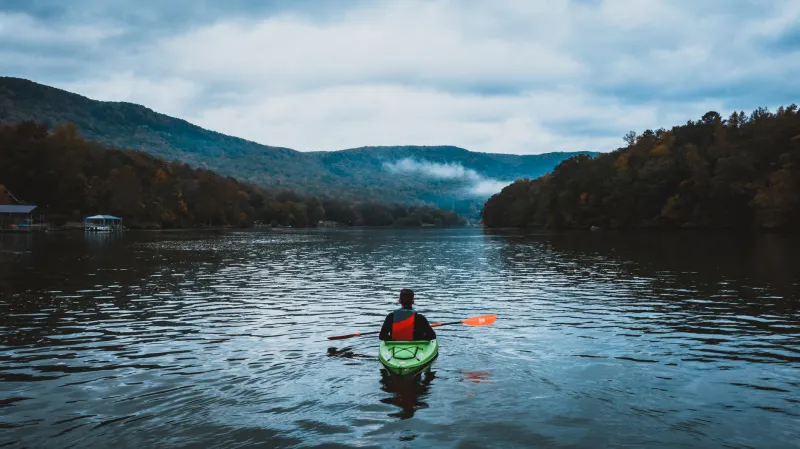
You might be surprised what you find. A spring-fed river that runs cold and clear through limestone bluffs. A coastal estuary teeming with shorebirds during migration. A reservoir with glassy early-morning water and not another paddler in sight.
The adventure was there the whole time. You just had to stop scrolling long enough to see it.