Loved to Death: What Happens When Everyone Discovers Your Favorite Put-In
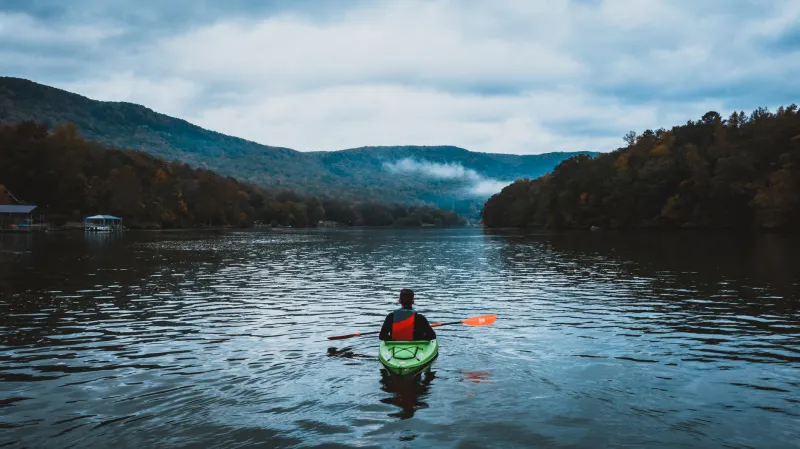
There's a specific kind of heartbreak that paddlers know well. You find a stretch of water that feels like a secret — glassy, quiet, alive with herons and the soft pull of current. Then one day you show up and there are forty kayaks in the parking lot, a drone buzzing overhead, and a trail of single-use water bottles marking the shoreline like breadcrumbs. The magic isn't gone, exactly. But it's been diluted into something you barely recognize.
This is the paddler's paradox. The same impulse that drives us to share incredible experiences — to post the photo, tag the location, write the glowing review — is slowly eroding the very qualities that made those places worth sharing in the first place.
It's not a hypothetical problem. It's happening right now, on rivers and lakes across the country.
The Algorithm Doesn't Care About Carrying Capacity
Social media has fundamentally changed how people discover paddling destinations. Where word-of-mouth once spread trip recommendations slowly through tight-knit paddling communities, a single viral reel can send thousands of visitors to a remote put-in within weeks. River managers and local outfitters are watching it happen in real time.
Take the Buffalo National River in Arkansas, one of the first federally protected rivers in the United States. Visitation has surged dramatically over the past decade, with canoe and kayak traffic during peak season reaching levels the river corridor was never designed to absorb. Sandbars that once served as quiet campsites now look like festival grounds on summer weekends. Vegetation gets trampled, wildlife gets displaced, and the solitude that defined the experience disappears entirely.
The story repeats itself across the country — on the Boundary Waters Canoe Area Wilderness in Minnesota, along the Green River in Utah, on the crystalline spring-fed runs of central Florida. The details change. The pattern doesn't.
"People aren't coming here to trash the place," says one outfitter who's worked the Ozarks paddling corridor for over fifteen years. "They love it. That's the problem. You can love a river to death just as easily as you can neglect it."
What Overtourism Actually Does to a Waterway
The environmental impact of paddling tourism isn't always dramatic. It rarely looks like a single catastrophic event. Instead, it accumulates — slowly, incrementally, invisibly — until one day the cumulative damage becomes impossible to ignore.
Bank erosion accelerates when dozens of boats drag across the same launch points day after day. Invasive species hitch rides on unwashed gear from one watershed to the next. Noise pollution disrupts nesting patterns for birds that depend on quiet riparian corridors. Human waste, when visitors skip the cat-hole and the pack-it-out ethic, contaminates groundwater near heavily used campsites.
And then there's the social carrying capacity problem — the point at which crowding degrades the experience so thoroughly that the destination loses the very appeal that attracted visitors in the first place. Once that threshold is crossed, the visitors who sought authenticity move on to find the next undiscovered gem, and the cycle starts over somewhere new.
River stewards working with conservation organizations like American Rivers and local watershed councils are increasingly focused on what they call "destination management" — proactive strategies to distribute visitor pressure before it concentrates into crisis. But those strategies require buy-in from the paddling community itself, and that's where things get complicated.
The Ethics of Sharing
Here's where this gets genuinely uncomfortable for most of us who love paddling and love talking about paddling: the outdoor content ecosystem runs on discovery. Trip reports, destination guides, social posts — they're part of how paddling culture sustains itself, how new paddlers find their footing, how the community stays connected. Asking people to stop sharing feels both unrealistic and a little hypocritical.
But there's a meaningful difference between sharing an experience and broadcasting coordinates.
Geo-tagging specific put-ins, naming obscure access points in public posts, publishing precise GPS routes for sensitive wilderness corridors — these aren't neutral acts. They're invitations with no guest list and no RSVP limit. Some paddlers have started deliberately geo-tagging nearby towns instead of specific launch sites, or keeping location details in direct messages rather than public captions. It's a small shift that can make a real difference.
"We're not asking people to keep secrets," explains one river conservation advocate who works with paddling clubs throughout the Southeast. "We're asking them to think about the difference between sharing an experience and publishing an address."
A Framework for Showing Up Responsibly
None of this means you shouldn't paddle popular destinations. It means you should think carefully about how, when, and in what spirit you do it.
Go during shoulder season. Peak summer weekends concentrate the most damage. Visiting in spring or fall reduces pressure on both the resource and your own experience. You'll often find better conditions anyway.
Support local outfitters. Local paddle shops and guide services have a direct stake in the health of their home waterways. They're often the most reliable source of current conditions, access etiquette, and conservation context. Booking through them keeps dollars in the community and builds relationships that matter.
Follow permit systems without grumbling. Lottery systems and permit requirements for high-demand corridors exist for a reason. They're not bureaucratic overreach — they're one of the few tools managers have to keep beloved places from being destroyed by their own popularity. Respect the system, even when it's inconvenient.
Pack out everything. Every single thing. This one shouldn't need repeating, but it does.
Speak up. If you see behavior that's damaging — boats dragging across sensitive vegetation, waste left behind, wildlife being approached too closely — say something. The paddling community polices itself best when its members actually police themselves.
The Water Doesn't Owe Us Anything
There's a version of adventure travel that treats wild places as content to be consumed, checked off, and replaced with the next discovery. It's a framework that's deeply at odds with what most paddlers actually believe about their relationship with water.
The rivers and lakes that define this sport aren't infinite. They're specific, irreplaceable, and genuinely vulnerable to the pressure we put on them. That's not a reason to stay home — it's a reason to show up differently.
The best paddling experiences aren't the ones you captured perfectly for the grid. They're the ones where the water felt alive around you, where the quiet was real, where the place hadn't yet been processed into a destination. Protecting that quality is on all of us.
Ride the current. Just make sure it's still there for the next person who needs it.